Defining the Full Stack Software Engineer Path
Intensive full stack software engineering programs can prepare learners for careers in software development – even with zero prior coding experience. One such program that has gained attention, particularly across Africa, is offered by ALX. While it has produced notable outcomes in that region, it is important for prospective students – especially those in the United States – to understand what this model involves and how it compares to accredited domestic options.
Here is a quick snapshot of what the ALX program offers:
| Feature | Details |
|---|---|
| Duration | 12 months (intensive) or 4 months (intro, part-time) |
| Weekly Commitment | ~70 hours/week (full program) or ~20 hours/week (intro) |
| Cost | Tuition often sponsored; one-time $400 admin fee |
| Target Audience | Ages 18-34, no coding background required |
| Format | Fully online, with optional physical learning hubs |
| Career Support | Access to professional fellowship and networking |
| Graduate Impact | 347,100+ graduates; 257,900+ youth placed in work |
The program is built around Silicon Valley standards, a peer-learning model, and deep problem-solving skills – not just coding syntax.
The global tech industry is facing a projected shortage of 29 million tech workers by 2030. Various programs are stepping up to help close that gap. Whether you are a complete beginner exploring your first step into tech, or someone evaluating different training paths, understanding what an intensive full stack model actually looks like – the structure, the rigor, and the real outcomes – is a smart starting point. However, it is equally important to consider accredited, career-focused alternatives that may offer a more practical path depending on your location and goals.
As an educator and career training specialist at DSDT College, I have experience guiding career changers, veterans, and high school graduates into accredited tech programs, including full stack software engineering pathways. In this guide, I will walk you through the ALX model so you can make an informed comparison and decide which path is right for you.
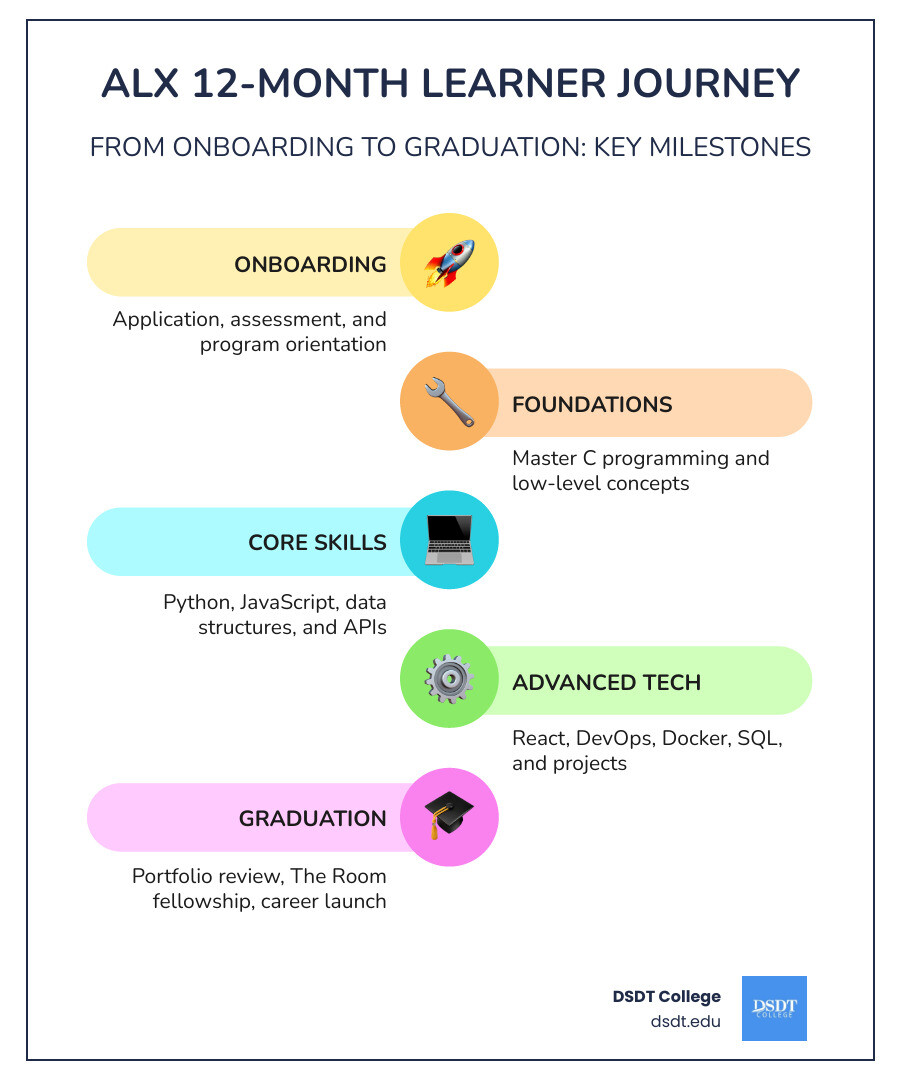
When we talk about the ALX full stack software engineer path, we are describing one of the more rigorous training models available today. This is not a “learn to code in 30 days” course. It is a 12-month marathon that demands roughly 70 hours of work every single week. To put that in perspective, that is nearly double the commitment of a standard full-time job.
The program is designed to mirror high global engineering standards. One notable aspect of this journey is the peer-learning model. Instead of traditional lectures, learners are often challenged with a project and a community of peers to help solve it. While this approach can be effective for self-motivated learners, it also means there is less structured instructor support compared to accredited college programs – something worth considering if you prefer guided learning environments.
The Full Stack Software Engineer Mindset
Becoming a full stack software engineer requires more than just memorizing Python libraries. It requires a specific psychological makeup often referred to as “The Hard Way” philosophy. At DSDT College, we see this in our own intensive programs – the students who succeed are the ones who embrace the struggle while also benefiting from structured mentorship and accredited credentials.
Key traits developed in rigorous full stack programs include:
- Problem-Solving: Learning how to break down a massive, intimidating problem into tiny, manageable tasks.
- Resilience: Dealing with “debugging marathons” where code refuses to work for days on end.
- Grit: The ability to stay focused when your deadline is close and the project is still unfinished.
- Engineering Reasoning: Understanding why a system works the way it does, rather than just copying and pasting solutions from the internet.
Unique Program Features
While the core of the ALX program is online, it offers physical learning hubs in cities like Casablanca to foster in-person collaboration. These hubs act as co-working spaces where learners can escape distractions and network with other future engineers.
Post-graduation, students may gain entry into professional fellowship communities that provide a long-term support system for professional development, global networking, and job opportunities. However, for U.S.-based students, it is worth noting that domestic accredited programs like those at DSDT College offer similar career support along with nationally recognized credentials, financial aid options for veterans and military families, and no 70-hour weekly time commitment. For readers exploring the broader field, full-stack web development is a helpful overview of how front-end and back-end skills come together in real-world engineering roles.
Curriculum and Technical Structure
The ALX curriculum is divided into stages that move from the “how” of computers to the “what” of modern web applications.
| Feature | Intro to Software Engineering | Full Stack SE Program |
|---|---|---|
| Duration | 4 Months | 12 Months |
| Commitment | 20 Hours/Week | 70 Hours/Week |
| Focus | Basics & Foundations | Professional Engineering |
| Outcome | Viable Full Stack App | Career-Ready Portfolio |
The 12-month program starts with low-level foundations. Students will not touch a “pretty” website for months. Instead, they spend about half a year mastering C programming, memory allocation, and data structures. This builds fundamental engineering reasoning. Once you understand how a computer manages memory in C, moving to higher-level languages like Python or JavaScript feels like a breeze.
Mastering the Full Stack Software Engineer Curriculum
A full stack software engineer must master both ends of the development spectrum:
- Front-end Aesthetics: Using React and JavaScript to create intuitive, fast user interfaces.
- Back-end Logic: Building the “brain” of the app using Python, SQL, and API integrations.
- Strict Standards: The ALX program uses tools like the “Betty” style checker, which forces students to write clean, documented code. If the code is messy, it does not pass – even if it works.
The journey culminates in a portfolio project where students build a real-world application from scratch. This might be a food delivery app, a crypto tracker, or a social network for artists. Portfolio projects are a valuable asset regardless of which program you attend – accredited programs like DSDT College’s full stack developer program also emphasize hands-on portfolio building as a core component of career readiness.
Specialized Technical Tracks
Beyond basic web development, the ALX program dives into the “invisible” side of tech:
- System Engineering & DevOps: Learning how to manage servers, use Nginx, and deploy apps using Docker.
- Database Management: Mastering SQL and data relationships.
- Mobile App Testing: Ensuring software works across different devices and environments.
Admission, Costs, and Requirements
The application process is designed to find the most determined talent. It isn’t about what you already know; it’s about how fast you can learn.
The Selection Process:
- Online Application: A registration form followed by a 90-minute assessment.
- Cognitive & English Tests: You don’t need to be a math genius, but you do need strong English proficiency and logical reasoning skills.
Key Requirements:
- Age: Generally targeted at youth aged 18-34.
- Admin Fee: While the tuition is often fully sponsored (thanks to partners like the Mastercard Foundation), there is typically a one-time administration fee of approximately $400.
- Hardware: You must have a reliable laptop (at least 8GB RAM is recommended) and a very stable internet connection. Because the curriculum is heavily Linux-based, many students end up mastering the command line early on.
Career Outcomes and Professional Fellowship
The ultimate goal of any full stack software engineering program is employment. The ALX program reports that over 257,000 youth have been placed in work through its initiatives, primarily across Africa.
A major factor in career success for any program graduate is structured career acceleration. Graduates of intensive programs often benefit from:
- CV Matching: Getting your resume in front of the right hiring managers.
- Interview Prep: Mastering the STAR method (Situation, Task, Action, Result) for behavioral interviews and white-boarding for technical ones.
- Salary Negotiation: Learning how to research market rates and advocate for your worth.
These career services are not unique to any single program. At DSDT College, for example, career support is built into every accredited program, helping graduates connect with employers across the United States.
Real-World Outcomes for Full Stack Software Engineers
Graduates of intensive full stack programs have gone on to a variety of roles, including:
- Tech Lead positions for international startups.
- Freelance AI Trainers, helping to refine the next generation of LLMs.
- Launching their own tech companies.
While these outcomes are encouraging, prospective students should carefully evaluate which program best fits their circumstances. For U.S.-based learners, accredited domestic programs may offer more relevant employer connections and recognized credentials.
Frequently Asked Questions about the ALX Program
Is the ALX program beginner-friendly?
It is designed for those with zero coding background, meaning you do not need a Computer Science degree to start. However, it is not “beginner-friendly” in terms of pace. It is incredibly fast and rigorous. If you are not prepared to spend your nights debugging and teaching yourself complex concepts via Google and peer support, it will be very difficult. For learners who prefer more structured instruction with instructor-led guidance, accredited programs like those at DSDT College may be a better fit.
What are the hardware requirements for the program?
You need a laptop capable of running a Linux environment (or a virtual machine). At least an i5 processor (or equivalent) and 8GB of RAM is recommended. Because the program is fully online, having a backup power source or access to a hub is critical in regions with frequent power outages.
How does the sponsorship model work?
Through partnerships with organizations like the Mastercard Foundation, ALX is able to waive tuition costs for participants, primarily targeting African talent. For U.S.-based students, different funding mechanisms are available through accredited institutions like DSDT College to ensure career-focused tech education remains accessible.
Conclusion
In summary, the ALX model offers a rigorous path for self-motivated learners. While it has established a presence in specific global markets, U.S.-based students often find that accredited domestic programs better align with local employer expectations and professional standards.
At DSDT College, we provide nationally accredited programs tailored for those who want to break into tech and healthcare without the waitlists or SAT requirements of traditional universities. Whether you are interested in Cybersecurity, Digital Media, or our full stack developer programs, we are here to support your journey into the digital economy with flexible online learning, career support, and financial aid options including the Post-9/11 GI Bill®, Tuition Assistance, and MyCAA. Your future in tech starts with the first line of code – or the first application. Don’t put your life on hold; start building it today.