The American Registry of Radiologic Technologists (ARRT) Primary Pathway is the foundational route for individuals entering the medical imaging field who wish to specialize in Magnetic Resonance Imaging (MRI). This pathway is specifically designed for those who are new to radiologic sciences and are seeking their initial ARRT certification. To qualify, candidates must successfully complete an accredited educational program that meets the ARRT’s stringent requirements, encompassing both rigorous academic coursework and extensive supervised clinical experience.
This pathway stands distinct from the Post-Primary Pathway, which caters to technologists already certified by the ARRT in another discipline, such as Radiography (R). These individuals would then pursue MRI as an additional credential. The Primary Pathway, however, ensures a comprehensive and immersive educational experience from the ground up. It instills a deep understanding of MRI principles, patient safety protocols, and the intricate science behind image production. This foundational training is crucial, as it prepares technologists to not only operate MRI equipment but also to produce high-quality diagnostic images safely and effectively, directly contributing to patient care and accurate diagnoses.
Our commitment at DSDT College is to provide this comprehensive foundational training through our Associate of Applied Science in MRI Technology (ARRT Primary Pathway) program. We ensure our curriculum and clinical experiences align perfectly with the ARRT’s demanding standards, preparing our graduates for successful careers.
American Registry of Radiologic Technologists (ARRT)
Which Accredited Programs Offer ARRT Primary Pathway MRI Training?
Accreditation is a cornerstone of quality education in medical imaging, especially for programs aiming to qualify graduates for the ARRT Primary Pathway. Key accrediting bodies, such as the Joint Review Commission on Education in Radiologic Technology (JRCERT) and the Accrediting Bureau of Health Education Schools (ABHES), play a crucial role in upholding educational standards. These accreditations are vital because they confirm that a program’s curriculum, faculty expertise, and facility resources meet rigorous benchmarks, ensuring that graduates are eligible to sit for the ARRT certification examination.
Accredited institutions across the nation offer comprehensive training specifically tailored for the ARRT Primary Pathway in MRI. These programs typically lead to an Associate of Applied Science (AAS) degree, a Bachelor of Science (BS) degree, or a specialized certificate, all structured to fulfill the demanding ARRT requirements.
DSDT College proudly offers an Associate of Applied Science in MRI Technology (ARRT Primary Pathway). Our program is designed to provide comprehensive training for students nationwide through online learning, with local options available in Detroit, MI. We are committed to meeting the rigorous requirements for ARRT certification, ensuring our graduates are well-prepared to produce high-quality images and excel in the field. Our program focuses on delivering the essential knowledge and practical skills needed for entry-level MRI technologists.
Joint Review Commission on Education in Radiologic Technology (JRCERT); Accrediting Bureau of Health Education Schools (ABHES)
What Key Curriculum Components Ensure High-Quality MRI Image Production?
Producing high-quality MRI images is an intricate process that demands a profound understanding of both theoretical principles and practical application. ARRT Primary Pathway programs are meticulously designed to integrate extensive didactic instruction with hands-on training, covering essential curriculum components that are critical for mastering image production. These typically include:
- MRI Physics and Instrumentation: This component delves into the fundamental science behind MRI. Students gain a detailed understanding of magnetic fields, radiofrequency pulses, how signals are acquired, and the complex process of image formation. This knowledge is indispensable for technologists, as it directly informs their ability to manipulate sequence parameters effectively to optimize image quality, enhance contrast, and minimize artifacts. Understanding the physics allows us to truly master the machine.
- Cross-Sectional Anatomy and Physiology: An in-depth study of human anatomy, viewed in various cross-sectional planes, is crucial. This knowledge enables accurate patient positioning, precise identification of anatomical structures, and the ability to recognize subtle pathological changes. Technologists must be able to visualize the internal structures to ensure the correct area is imaged with optimal clarity.
- MRI Safety and Patient Care: Given the powerful magnetic fields involved, comprehensive training in MRI safety is paramount. This includes understanding potential hazards, rigorous patient screening protocols, safe administration of contrast media, venipuncture techniques, and emergency procedures. We emphasize patient comfort and safety not only as ethical imperatives but also as critical factors for successful imaging, as a calm and compliant patient contributes to better image quality.
- Imaging Procedures and Protocols: Students master a wide array of standard and advanced MRI sequences for different body parts, such as the brain, spine, abdomen, and musculoskeletal system. We teach how to select appropriate protocols based on specific clinical indications and individual patient conditions, ensuring the most relevant and diagnostic images are acquired.
- Image Analysis and Critique: Developing critical thinking skills is central to this component. Students learn to systematically evaluate image quality, identify and troubleshoot various artifacts, and make necessary real-time adjustments to sequence parameters or patient positioning. This iterative process of critique and adjustment is fundamental to consistently achieving diagnostic-quality images.
- Pathology: Understanding common diseases and conditions and how they manifest on MRI scans helps technologists recognize abnormalities. This knowledge allows us to tailor imaging techniques to optimally visualize specific pathologies, ensuring that the images provide maximum diagnostic value to the interpreting physician.
Comprehensive programs, such as our Associate of Applied Science in MRI Technology at DSDT College, integrate this didactic instruction with extensive hands-on training. A robust curriculum typically includes a significant number of general education hours, technical didactic hours, and supervised clinical hours. Some programs adopt a modular approach to cover these topics effectively. Our curriculum is often guided by parameters suggested by respected organizations like the Association of Educators in Imaging and Radiologic Sciences (AEIRS) and the American Society of Radiologic Technologists (ASRT), ensuring industry relevance and the highest quality of education.
Association of Educators in Imaging and Radiologic Sciences (AEIRS); American Society of Radiologic Technologists (ASRT)
How Do Programs Structure Clinical Training for MRI Technologists?
Hands-on clinical training is an indispensable component for developing the practical skills required to produce high-quality MRI images. ARRT Primary Pathway programs place a strong emphasis on extensive supervised clinical experience, ensuring that students gain competency in authentic, real-world healthcare settings.
- Clinical Hours and Rotations: Programs typically mandate a substantial number of supervised clinical hours, often ranging from several hundred to over a thousand. Students engage in rotations through diverse healthcare environments, including hospitals, outpatient facilities, and dedicated imaging centers. This varied exposure is crucial for encountering a wide range of patient conditions, equipment, and procedural scenarios, providing a well-rounded and comprehensive learning experience.
- Competency Requirements: To meet ARRT eligibility, students must demonstrate proficiency in a broad spectrum of clinical competencies. This includes the ability to perform routine MRI procedures accurately, master venipuncture techniques for contrast administration, provide effective and compassionate patient care (especially for anxious patients), assist in complex MR-guided biopsies, and consistently apply safe MRI practices for the protection of patients, staff, and themselves. Programs often require meticulous documentation of a specific number of ARRT MRI competencies, ensuring each student achieves the necessary skill level.
- Image Critique and Adjustment: During clinical rotations, under the guidance of experienced technologists, students learn to critically evaluate acquired images for diagnostic quality. They identify artifacts that could obscure diagnosis and make real-time adjustments to sequence parameters or patient positioning. This iterative process of critical assessment and immediate correction is fundamental to consistently producing high-quality, diagnostically valuable images.
- DSDT College’s Approach: As part of our Associate of Applied Science in MRI Technology (ARRT Primary Pathway) program, we are actively forging partnerships with hospitals and imaging centers nationwide, including our local community in Detroit, to host MRI externs. This commitment ensures that our students receive comprehensive clinical exposure and hands-on training in diverse settings, preparing them thoroughly for the dynamic demands of the profession. We understand that practical experience is key to transforming theoretical knowledge into expert skill.
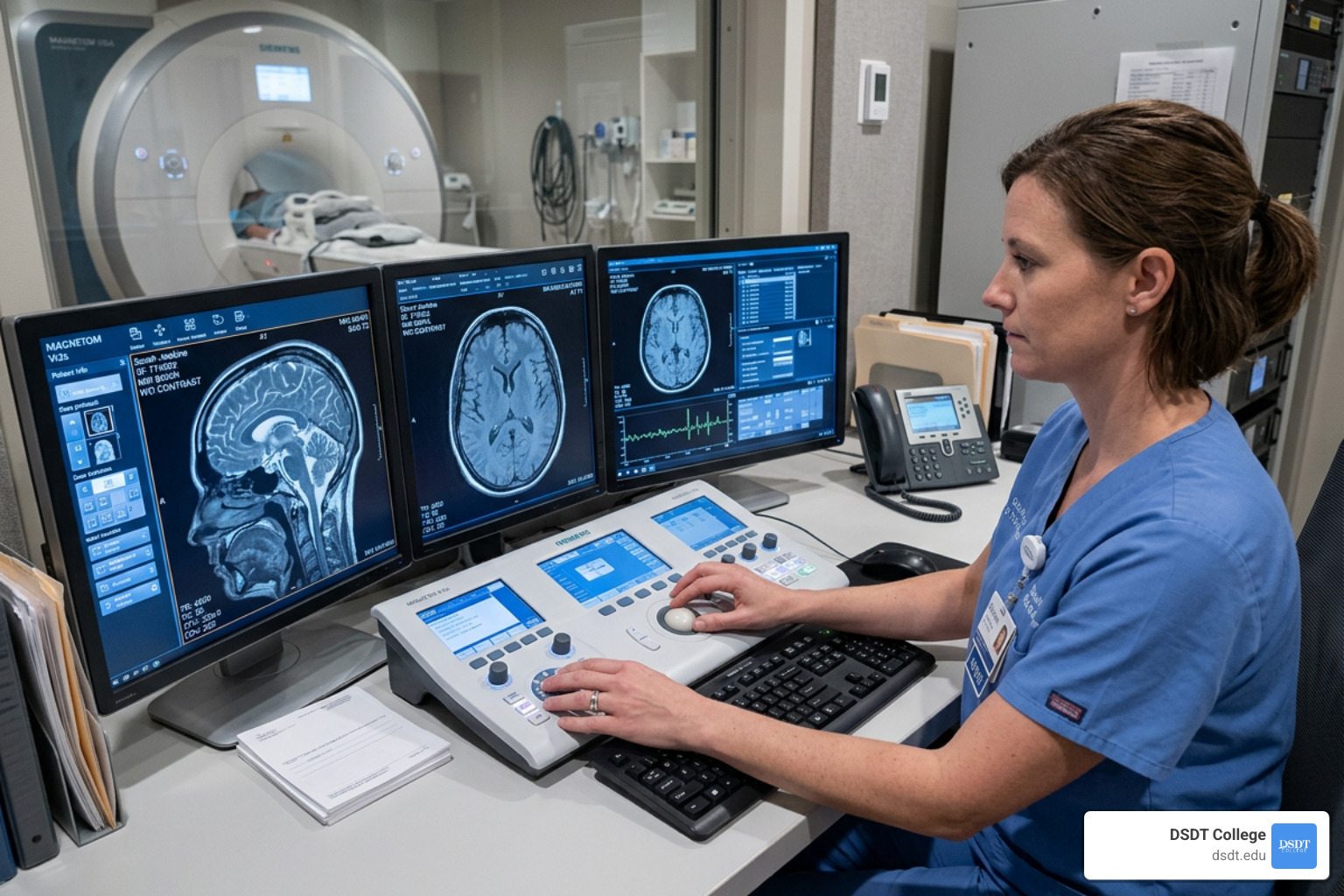
Common Clinical Skills Developed:
- Patient screening for MRI contraindications
- Venipuncture for contrast administration
- Safe administration of contrast media
- Precise patient positioning and coil selection
- Selection and modification of imaging sequences
- Assessment of image quality and troubleshooting artifacts
- Emergency response procedures within the MRI suite
- Effective communication with patients and healthcare teams
What Are the Admission Requirements and Program Formats for Primary Pathway MRI Programs?
Admission requirements and program formats for ARRT Primary Pathway MRI programs can vary significantly among institutions. However, all share a common goal: to select qualified candidates and provide effective, flexible training that leads to ARRT certification and a successful career.
- Admission Requirements:
- Academic Prerequisites: Most programs require prospective students to hold at least an associate degree or to have completed specific college-level courses. These often include foundational subjects such as human anatomy and physiology, physics, medical terminology, and college-level mathematics. A minimum GPA, typically 2.5 or higher, is also a common requirement. For example, some programs might specifically require courses like BIOL 2401, PHYS 1401/1410, and MATH 1314 with a grade of ‘C’ or higher.
- Experience: While not always mandatory, some programs may strongly recommend or require observation hours in an MRI department or prior patient care experience. This helps ensure applicants have a realistic understanding of the profession.
- Other Requirements: For acceptance into clinical placements, standard requirements include background checks, drug screenings, up-to-date immunizations, and proof of health insurance. These are essential for patient safety and compliance with healthcare facility regulations.
- Program Lengths and Formats:
- Duration: The length of these programs can vary. Certificate programs might be as short as 6 months (though these are often post-primary pathways or for existing technologists), while Associate of Applied Science degrees typically range from 18 to 24 months. Bachelor of Science programs, offering a more extensive curriculum, may span four semesters or more. For instance, some programs are structured into 72 approved instruction weeks, including general education, didactic, and supervised clinical hours.
- Delivery: We understand the need for flexibility in today’s educational landscape. Program formats include full-time, hybrid, and online options. Hybrid programs often combine the convenience of online didactic coursework with mandatory in-person clinical rotations, providing a balanced learning experience. DSDT College’s Associate of Applied Science in MRI Technology is designed to serve students online nationwide, with local options in Detroit, offering this flexibility while ensuring comprehensive training that meets all ARRT requirements.
- Costs and Financial Aid:
- Tuition and Fees: The financial investment for these programs varies significantly based on the institution, program length, and whether it’s a public or private college. It’s important for prospective students to research these costs thoroughly.
- Financial Aid: Many accredited programs, including ours, offer access to various forms of financial assistance. This can include federal financial aid (such as Pell Grants and student loans), scholarships (including those offered by professional organizations like the ASRT), and institutional payment plans. DSDT College is particularly proud to be a military-friendly institution. We actively target Veterans (Post-9/11 GI Bill®), Active-Duty Soldiers (Tuition Assistance), and Spouses (MyCAA) to help make quality education accessible to those who have served our country and their families. We believe in supporting our military community in pursuing rewarding careers in healthcare.
What Outcomes Can Students Expect from ARRT Primary Pathway MRI Programs?
Successful completion of an ARRT Primary Pathway MRI program opens doors to a rewarding and in-demand career. These programs are designed not just for certification, but for long-term professional success, and their effectiveness is often measured by several key outcomes.
- ARRT Exam Pass Rates: A strong indicator of a program’s quality and the thoroughness of its preparation is its ARRT certification exam pass rate. Many reputable programs consistently boast high first-attempt pass rates, with some reporting averages as high as 97% over a five-year period. This statistic reflects the effectiveness of their curriculum, dedicated faculty, and robust preparation strategies in equipping students for the rigorous examination. Our goal at DSDT College is to ensure our students are exceptionally well-prepared for this critical step in their careers.
- Job Placement Rates: The demand for qualified MRI technologists is robust and continues to grow. Programs with strong industry connections often report excellent job placement rates, with some achieving 100% employment for their graduates within 12 months of graduation. The U.S. Bureau of Labor Statistics projects an 8% growth for MRI technologists from 2022 to 2032, a rate faster than the average for all occupations. This strong outlook, combined with entry-level salaries often around $70,000 per year, underscores the value of this career path.
- Completion Rates: High program completion rates signify effective student support systems and a well-structured curriculum. For example, some programs report annual completion rates as high as 88%, indicating that the majority of enrolled students successfully navigate the program to graduation.
- Career Opportunities: Graduates of ARRT Primary Pathway MRI programs are well-prepared for diverse roles as MRI Technologists in various healthcare settings. These include large university hospitals, community hospitals, specialized imaging centers, and outpatient clinics. With gained experience and continued professional development, opportunities may expand to more specialized positions such as Field Clinical Specialist, applications specialist, or even Imaging Manager. ARRT certification is not just a credential; it is a crucial mark of professionalism, demonstrating a commitment to high standards of patient care and imaging quality, which is vital for career advancement and recognition within the medical community. Our program at DSDT College aims to equip our graduates with the skills and credentials to thrive in these varied and growing roles.

Frequently Asked Questions about ARRT Primary Pathway MRI Programs
What is the difference between ARRT Primary and Post-Primary MRI certification?
The ARRT Primary Pathway is designed for individuals seeking their initial ARRT certification in Magnetic Resonance Imaging. It requires completing an accredited educational program that covers both didactic and clinical requirements from the ground up. In contrast, the Post-Primary Pathway is for those who are already ARRT certified in another primary discipline (e.g., Radiography, Nuclear Medicine Technology) and wish to add an MRI credential. This pathway typically requires specific clinical experience and often a shorter, focused educational program.
How long does it take to become an MRI Technologist through a Primary Pathway program?
The duration of ARRT Primary Pathway MRI programs can vary. Certificate programs, which are less common for primary pathways, might be shorter, but most lead to an Associate of Applied Science (AAS) degree, typically taking 18 to 24 months of full-time study. Bachelor of Science (BS) programs, offering a more comprehensive education, can take up to four semesters or more. The total length often includes a significant number of supervised clinical hours.
Is online MRI training available for the ARRT Primary Pathway?
Yes, online MRI training options are available for the ARRT Primary Pathway. Many institutions offer hybrid programs where the didactic (classroom) components are delivered online, providing flexibility for students. However, the extensive hands-on clinical training and competency requirements mandated by the ARRT always necessitate in-person, supervised rotations in healthcare facilities. DSDT College, for example, offers its Associate of Applied Science in MRI Technology (ARRT Primary Pathway) program with online components, serving students nationwide while ensuring robust clinical experiences are secured.
Conclusion
Choosing the right educational path is the first critical step toward a successful and impactful career as an MRI technologist. For those aspiring to produce high-quality magnetic resonance images and achieve initial ARRT certification, selecting an accredited program offering comprehensive training through the Primary Pathway is absolutely essential. These programs provide a robust foundation in MRI physics, detailed anatomy, crucial safety protocols, and extensive hands-on clinical experience. This ensures that graduates are not only well-prepared for the rigorous ARRT exam but also for the dynamic demands of the profession, ready to contribute meaningfully to patient diagnosis and care.
By carefully researching curriculum components, evaluating clinical opportunities, understanding admission requirements, and considering program outcomes, aspiring technologists can confidently find the ideal program to launch their careers. We understand the importance of this decision and are dedicated to providing an exceptional educational experience.
To explore a comprehensive, ARRT Primary Pathway-eligible program designed for today’s healthcare landscape, consider DSDT College’s Associate of Applied Science in MRI Technology. We are committed to equipping you with the knowledge and skills needed to excel in this vital field.