Why AI Marketing Analytics Training is Essential for Modern Marketers
In the past, marketing analytics meant looking at a spreadsheet of last month’s clicks and trying to guess what happened. Today, that approach is a recipe for falling behind. According to a study by McKinsey, generative AI and machine learning are fundamentally transforming digital marketing, with the potential to boost corporate profits by trillions of dollars annually.
For those of us in the field, AI marketing analytics training isn’t just another line on a resume; it is the key to unlocking “predictive” power. Instead of looking backward, AI allows us to look forward. We can now perform deep customer behavior analysis to predict churn before it happens or identify which leads are most likely to convert using predictive lead scoring.
The statistics are hard to ignore. With 88% of marketers reporting that AI helps them achieve hyper-personalization, the competitive advantage is clear. If you aren’t leveraging these tools, you are likely among the 81% of brands failing to segment audiences correctly. By mastering AI-driven analytics, you move from being a “data reporter” to a “strategic growth driver,” which is exactly why 73% of CMOs are increasing their investments in this specific area.
Core Competencies in AI Marketing Analytics Training
When we look at the curriculum of top-tier programs, we see a shift from traditional statistics to machine learning and algorithmic decision-making. High-quality AI marketing analytics training focuses on several core “pillars” that every modern marketer needs to master.
- Predictive Modeling: Learning how to use historical data to forecast future trends, such as demand forecasting or seasonal sales shifts.
- Customer Segmentation: Moving beyond basic demographics (age/location) to behavioral and psychographic clustering using machine learning algorithms.
- Natural Language Processing (NLP): Understanding how AI “reads” customer sentiment in reviews, social media comments, and emails to gauge brand health.
- Marketing Automation: Integrating AI into your CRM to trigger personalized messages based on real-time user actions.
- Algorithmic Bias Awareness: Identifying when data sets might lead to unfair or skewed marketing results and learning how to mitigate those risks.
Technical Tools and Hands-on Learning
You cannot learn AI marketing analytics by just reading a textbook. The best programs emphasize hands-on projects using the same tools we use in the industry every day. You should look for training that incorporates:
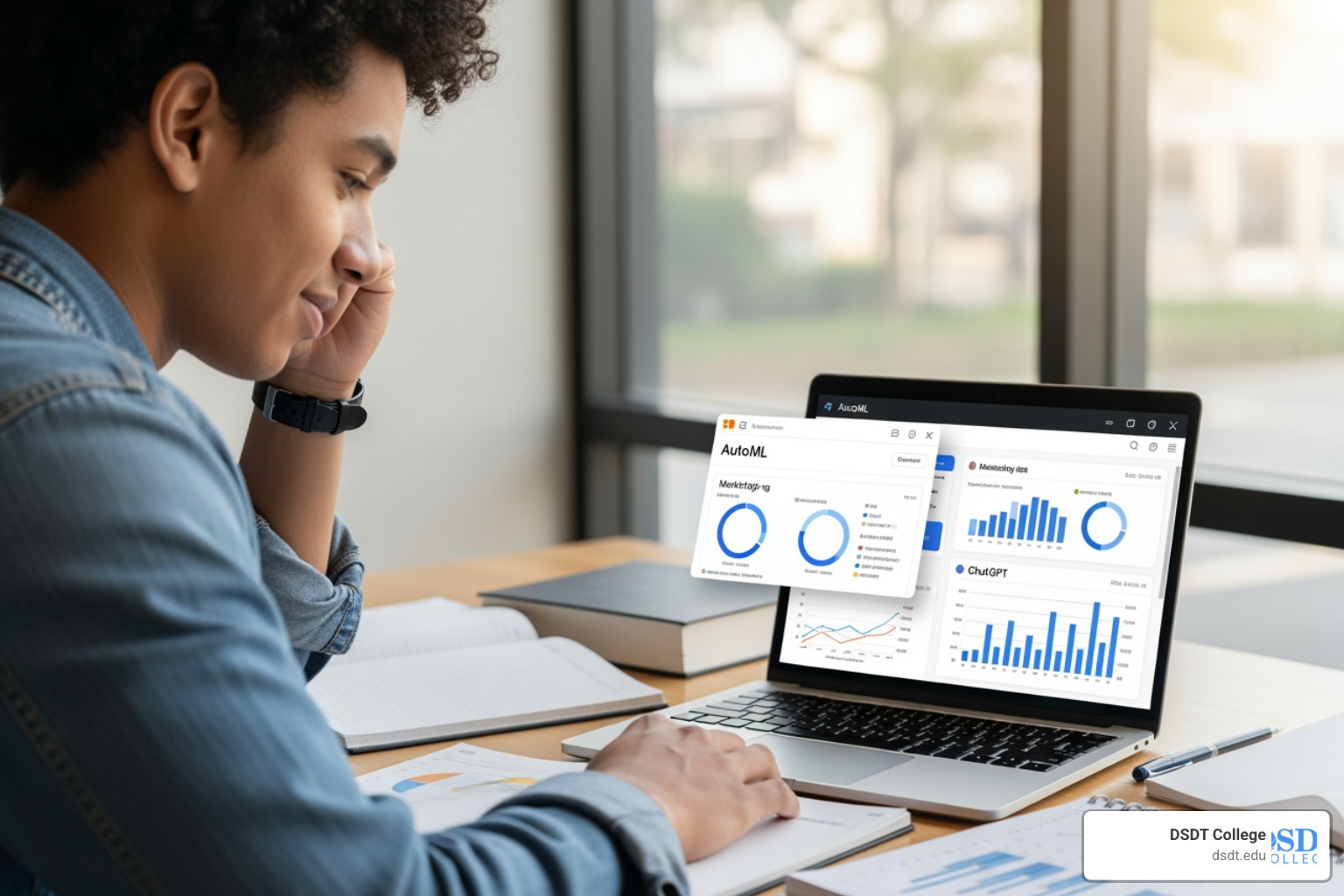
- AutoML (Automated Machine Learning): Tools that allow marketers to build predictive models without needing a PhD in data science.
- Generative AI (ChatGPT/Claude): Learning advanced prompt engineering to analyze vast datasets and extract strategic insights in seconds.
- IBM Watson & Adobe Tools: Utilizing enterprise-level platforms for personality insights and budget allocation.
- Multivariate Testing: Using AI to run thousands of campaign variations simultaneously to find the winning combination of creative and copy.
Ethical AI and Data Privacy in Marketing
As we lean more on data, the “creepiness factor” becomes a real business risk. Research shows that 50% of marketers are concerned about data privacy. Therefore, a significant portion of any reputable AI marketing analytics training must cover responsible AI.
We must learn how to navigate transparency—being open with customers about how their data is used—and compliance with evolving regulations. This includes understanding intellectual property rights when using generative AI for content and ensuring that our automated systems don’t inadvertently discriminate against certain audience groups.
Comparing Top AI Marketing Analytics Training Programs
Choosing a program depends heavily on your current career stage and your ultimate goals. Some professionals need a deep dive over several months, while others need “microlearning” they can finish during a lunch break.
| Feature | Executive Education Programs | Online Specializations | Microlearning Platforms |
|---|---|---|---|
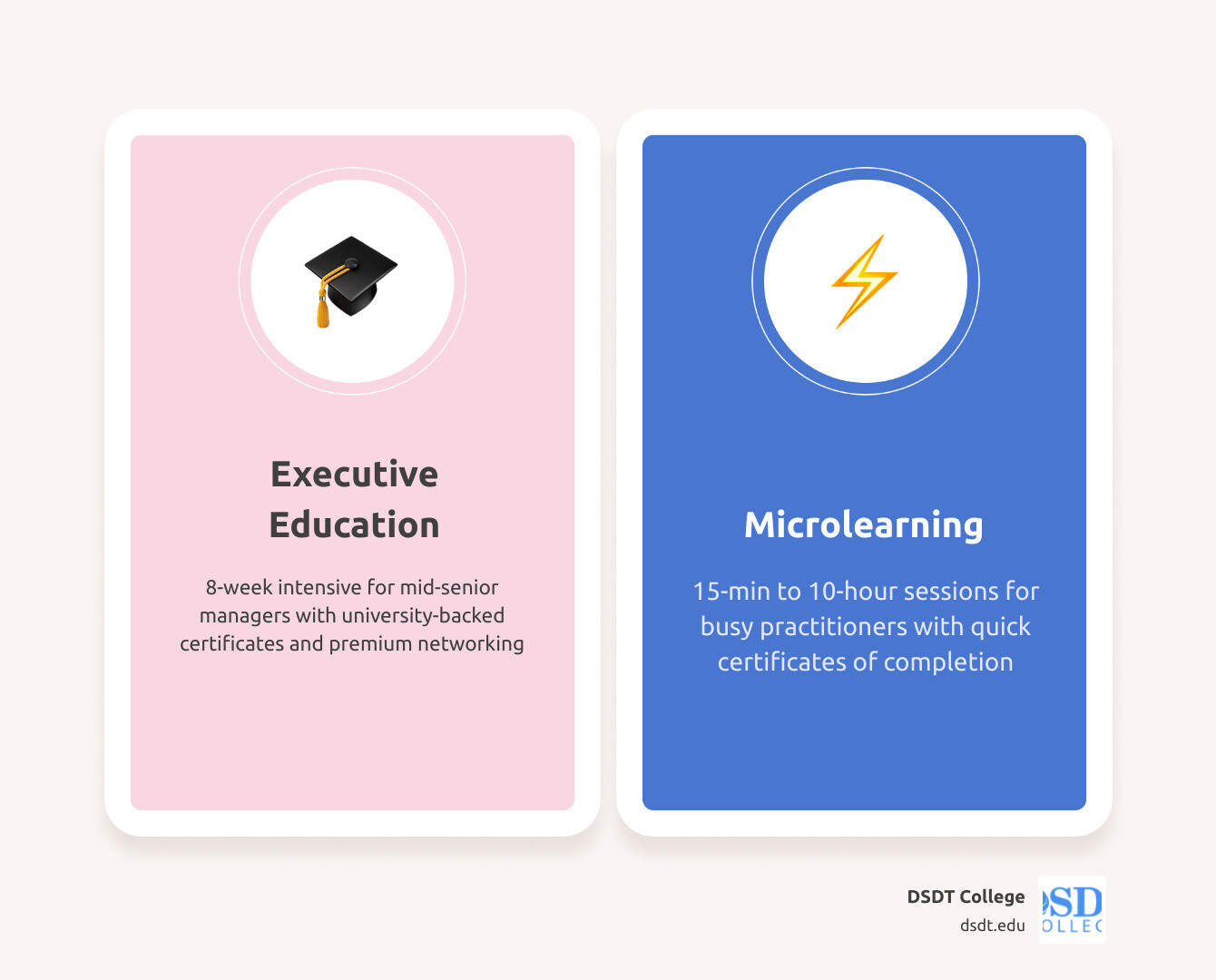
| Typical Duration | 8 weeks | 4-5 months | 15 minutes to 10 hours |
| Primary Audience | Mid-to-Senior Managers | Beginners & Career Changers | Busy Practitioners |
| Certification | University-backed Certificate | Digital Skills Badge | Certificate of Completion |
| Focus | Strategic Leadership & ROI | Tactical Implementation | Specific Tool Mastery |
| Networking | High (Peer cohorts) | Low (Discussion boards) | Minimal |
Executive Education vs. Low-Cost Certifications
Premium executive education programs often cost upwards of $2,000. Why the price jump? These programs usually offer live sessions with world-class faculty and access to high-level networking. You aren’t just learning to use a tool; you are learning how to lead a digital transformation within a multi-million dollar organization.
On the flip side, low-cost online specializations are fantastic for those of us just starting out. For a few hundred dollars, you can find multi-course series that cover the foundations of AI enablement and customer retention. These are perfect for building a portfolio and proving you have the “technical chops” for entry-level roles.
Evaluating the ROI of AI Marketing Analytics Training
The return on investment (ROI) for this training is often felt immediately. In my experience, professionals who complete these programs see:
- Increased Efficiency: Tasks that used to take a week—like segmenting a list of 50,000 customers—can now be done in minutes.
- Higher Accuracy: AI-powered lead scoring reduces the time sales teams waste on “cold” leads, directly boosting revenue.
- Career Advancement: By positioning yourself as an AI-literate marketer, you become “future-proof.” This is a major signal to employers that you are ready for senior leadership roles.
How to Choose the Right Program for Your Career Path
If you are in a market like Detroit or the broader Midwest, you know that the tech and marketing landscape is shifting fast. We are seeing a huge demand for “bridge” professionals—people who understand marketing but can also speak the language of data science.

Identifying Your Experience Level and Goals
- For High School Graduates & Beginners: Look for programs that focus on “how-to.” You need to learn SQL, basic data visualization, and how to use AI tools for SEO and content. Focus on certification-based education that leads directly to employment.
- For Career Changers & Veterans: Your goal is often “marketability.” Look for programs with a strong capstone project where you can work with a real organization. This allows you to say, “I didn’t just take a class; I solved a real business problem using AI.”
- For Mid-to-Senior Leaders: You don’t need to learn how to code. You need to learn how to manage the people who do. Focus on executive programs that emphasize strategy, ethics, and “AI literacy” for leadership.
At DSDT College, we emphasize this practical, career-focused approach. Whether you are looking at digital marketing or moving into information technology and cybersecurity, the ability to analyze data through the lens of AI is a universal skill. We serve everyone from high school grads to military veterans, ensuring our training options are flexible and aligned with what Detroit employers actually need.
Frequently Asked Questions about AI Marketing Analytics Training
What is the difference between marketing analytics and AI marketing analytics?
Traditional marketing analytics is “descriptive”—it tells you what happened in the past (e.g., “We had 1,000 clicks”). AI marketing analytics training teaches you “predictive” and “prescriptive” analytics. It uses machine learning to tell you what will happen next and what specific actions you should take to change that outcome.
Do I need coding skills to complete AI marketing analytics training?
Not necessarily! While knowing Python or SQL is a huge plus for data-heavy roles, many modern AI tools are “no-code” or “low-code.” Many executive-level programs focus entirely on the strategic application of tools like ChatGPT, IBM Watson, and AutoML, which require zero programming knowledge.
How long does it typically take to become certified in AI marketing analytics?
It varies by depth. You can get a “micro-credential” in as little as 15 minutes for a specific skill. However, a comprehensive certification that covers the full spectrum of AI marketing—from segmentation to ethics—typically takes between 6 and 10 hours for on-demand programs, or 8 weeks for university-led executive courses.
Conclusion
The “wait and see” period for AI in marketing is over. With billions of dollars in revenue on the line and a massive shift in how brands interact with customers, the demand for experts is skyrocketing. AI marketing analytics training is the bridge that takes you from a traditional marketer to a data-driven strategist.
At DSDT College, we believe in practical education that leads to jobs. Our focus on industry certifications and workforce readiness ensures that our students aren’t just learning theories—they are gaining the skills needed to enter high-demand industries like digital marketing, IT, and cybersecurity.
If you’re ready to take the next step in your professional journey and master the tools that are defining the future of business, we invite you to Explore AI training programs and see how our career-focused pathways can help you reach your goals. Whether you’re in Detroit, Phoenix, or anywhere in between, the future of marketing is data-driven, and that future starts with the right training.